
K Garira


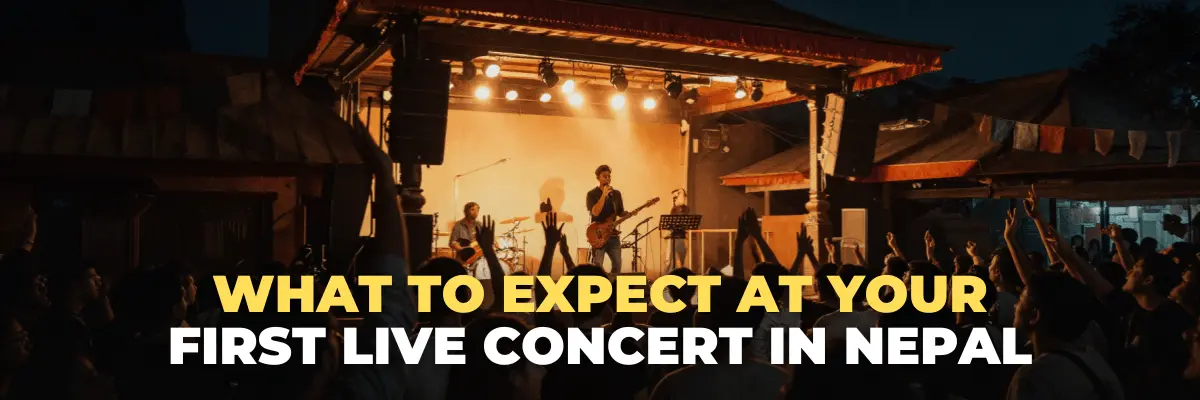
There is a version of your first Nepali concert experience that goes like this: you arrive late because you assumed the start time was approximate (it was not), you stand in the wrong area because nobody explained there were sections, you spend twenty minutes trying to figure out if your digital ticket is the right ticket, and you leave having heard about two-thirds of the show through a slightly confused haze.
Then there is the version where none of that happens, because someone told you how it works beforehand.
This is the guide. If you are a first-time concertgoer in Nepal, a tourist who wants to catch a live show in Kathmandu, or someone who has been meaning to go for years and keeps talking themselves out of it, here is what you actually need to know.
Quick Takeaways: Your First Live Concert in Nepal
- Nepal's live music scene has grown rapidly, with professional venues, diverse genres, and regular performances by talented local and international artists.
- Choose a concert that matches your musical taste and venue preference for the best first experience, whether it's indie, rock, hip-hop, jazz, or electronic music.
- Buy tickets in advance through verified platforms like Kgarira, as popular concerts often sell out before the event.
- Save a screenshot of your digital ticket before arriving, as internet connectivity at venues can sometimes be unreliable.
- Arrive around 15–30 minutes before the scheduled start time to avoid missing opening acts and to settle in comfortably.
- Use ride-hailing apps like Pathao or InDrive to travel to and from concert venues, especially during busy evenings in Kathmandu.
- Most venues have a relaxed dress code, offer food and drinks, and welcome both locals and international visitors.
- Standing slightly away from the speakers usually provides the best sound experience during live performances.
- Kathmandu's concert crowds are friendly, enthusiastic, and welcoming, making live shows enjoyable even if you're unfamiliar with the artists.
- Browse upcoming concerts and secure verified tickets through Kgarira to make the most of Nepal's thriving live music scene.
Nepal's Live Music Scene in 2026: More Than You Expect
The first thing worth knowing is that Kathmandu's concert scene has genuinely grown up. This is not a handful of hotel bars playing covers for expatriates. The city now has dedicated live music venues with professional sound systems, regular programming across multiple genres, festivals that draw thousands, and an independent music scene producing original artists who headline their own sold-out shows.
Genres you can reliably find on any given week in Kathmandu include indie and alternative, rock and metal, hip-hop and Nephop, jazz and acoustic, electronic and EDM, and folk-influenced Nepali originals. The range is real. So is the quality, particularly at the better-equipped venues.
If you have been waiting for Nepali live music to be worth your time, it passed that threshold a while ago. The more relevant question now is how to navigate it as a first-timer.
Step One: Finding an Event Worth Going To
The most common first-timer mistake is going to whatever is happening rather than choosing something deliberately. Kathmandu has enough programming that picking well makes a real difference.
What to look for:
- Genre match. If you have been listening to Sajjan Raj Vaidya or Swoopna Suman on Spotify, look for an indie or acoustic night rather than a metal show. The experience is better when the music is something you already connect with.
- Venue size. Your first show at an intimate 80-capacity room like Moksh in Jhamsikhel is a different experience from a 500-person indoor venue like Moksh Live Restaurant & Bar or a multi-thousand-person outdoor festival. Both are good. They are not the same thing.
- Artist familiarity. Going to a show by someone whose music you know makes the experience significantly more engaging than being in a crowd that knows the words to songs you have never heard.
Where to find events:
Kgarira lists upcoming events across Kathmandu and beyond, with real ticket links, venue details, and pricing. Checkkgarira.com before any weekend. Events at venues including Moksh Live, Eden Sanepa, The Everest Hotel, and XO Club are listed with buy buttons that take you directly to verified tickets.
Facebook event pages for individual venues are also worth following, but they sometimes post last-minute and sell out quickly for popular shows. Booking through Kgarira earlier in the week is the more reliable approach.
Step Two: Buying Tickets Without Getting Burned
Nepal's ticketing landscape has standardised considerably in the last couple of years, but first-timers still run into preventable problems.
Buy online before you go. Popular shows sell out. The assumption that you can always buy at the door is one that will eventually cost you an evening. For any show with an established artist or at a venue with limited capacity, book in advance.
Use verified platforms. Kgarira is one of the primary ticket platforms for live events in Nepal. Tickets bought through it are legitimate. Tickets bought from strangers outside the venue, via WhatsApp forwarding chains, or from unofficial resellers are not necessarily anything of the sort. The face-value ticket for most Nepali concerts ranges from NPR 500 to NPR 3,000, depending on the artist and venue. If someone is offering you a ticket for significantly more than the listed price, you are being overcharged. If they are offering it for significantly less, be cautious about why.
Download and screenshot your ticket. Internet connectivity inside some venues can be inconsistent. Having a screenshot of your QR code or ticket confirmation in your camera roll means you are not frantically searching your email in a queue. Email confirmations also work as a backup if the app version fails to load.
Check what is included. Some venues have a cover charge that includes a drink. Some events have multiple pricing tiers (general admission, VIP seating, table packages). Read what you are buying before you pay.
Step Three: Getting There
Kathmandu's traffic is what it is. Factor in more time than you think you need, particularly if the venue is in Jhamsikhel, Lazimpat, or anywhere off the ring road on a Friday evening.
Taxis and ride-apps: Pathao and InDriver are the most widely used ride-hailing apps in Kathmandu. They are more reliable than street taxis for metered pricing. If you flag a taxi from the street, agree on the fare before you get in.
Parking: Several concert venues in Kathmandu have limited or no parking. If you are driving, check the venue situation in advance. Most people arrive via taxi or app. It is more straightforward.
What time to arrive: Nepali shows often start 15 to 30 minutes after the listed time, but not always. For a show starting at 7pm, arriving at 7:15pm is usually fine. Arriving at 8pm risks missing the opening act or the beginning of the headliner set at busier events. When in doubt, be there on time. You can always have a drink.
Step Four: At the Venue
Entry and Tickets
Most venues in Kathmandu do ticket checks at the door. Have your ticket ready, either on your phone or printed. For digital tickets from Kgarira, the QR code on your ticket is scanned at entry. Keep it pulled up before you reach the front of the queue rather than opening your email while holding up the line.
Some smaller venues operate a cover charge at the door rather than ticketed entry. If that is the case for the event you are attending, the listing on Kgarira will say so.
What to Wear
No dress code applies at most Kathmandu concert venues. Nobody is getting turned away at for wearing trainers.
One practical note: Kathmandu evenings can be cool, particularly outside monsoon season. If the venue is partially outdoors or the walk between your ride and the door is more than a few metres, a light layer is worth having.
Inside the Venue
Drinks: Most live music venues in Kathmandu have a bar. Beer, spirits, and soft drinks are the standard. Prices are what you would expect for a venue: higher than a street stall, lower than a hotel bar. Local lager (Everest, Gorkha) is the default and perfectly fine.
Sound positioning: General advice for any live show: if you want good sound, stand back from the speakers rather than directly in front of them, and slightly off-centre from the main stacks. The sound engineer has spent time calibrating the room. Standing immediately against a speaker usually means the mix is worse, not better.
Photography and phones: Informal photography is generally fine at most Nepali concerts. Video-recording full songs on a phone is less popular with other audience members than you might hope. Read the room. Some shows have specific no-photography rules, particularly for international acts. The venue will tell you on the night if that applies.
The crowd: Nepali concert audiences are enthusiastic and warm. If you are visibly a foreigner and do not know the words to songs, nobody is bothered. You are there to listen, same as everyone else. If someone tries to involve you in a sing-along and you have no idea what is being sung, participate anyway. Sincerity matters more than accuracy.
Step Five: The Show Itself
What Nepali Shows Feel Like
A live performance in Nepal, particularly at a mid-sized indie or rock show, tends to feel more communal than competitive. The audience is usually there because they genuinely know and like the music. Between songs, the artist often speaks directly to the crowd in a mix of Nepali and English. There is warmth in the room that is specific to this context: a music scene that is still growing into itself, where audiences and artists feel like they are part of the same project.
First-timers sometimes describe being moved by something they did not expect. The concert they came to see as a social outing turns into something more personal. That happens here with reasonable frequency.
Encores and Endings
Nepali shows do not always follow the Western convention of a deliberate encore with a dramatic re-emergence. Some do. Many end simply when the set ends. The crowd response is the same either way: loud.
After the Show
Kathmandu's post-show culture is straightforward: some people go home, some people stay at the venue, and some migrate to whichever bar is nearby. The artist is sometimes in the room after smaller shows. If you want to tell someone their set was good, just say so. The indie music community in Kathmandu is small enough that the artist is approximately three degrees from everyone in the room and genuinely appreciates direct feedback from an audience member.
A Quick Genre Guide for First-Timers Choosing Their First Show
Not sure what to pick? Here is the rough shape of each:
- Indie/acoustic night: Seated or standing room, one to three artists, conversation-level volume between songs, Sajjan Raj Vaidya or Swoopna Suman. Good for a first show if you want to actually hear the music.
- Rock or metal show: Louder, standing, more physical crowd, genuinely excellent musicianship from the Nepali rock community. Cobweb and Underside are reference points for what this looks like at its best.
- Hip-hop or Nephop event: High energy, call-and-response crowd participation, knowing the lyrics matters more here than anywhere else. VTEN and Laure represent what the top of this scene looks like.
- Electronic or festival: Outdoors or large indoor venue, multiple artists, expect a later finish and a larger crowd. The Silence Festival in Pokhara is the annual peak of this category.
- Jazz at a smaller venue: Moksh or Jazz Upstairs in Lazimpat. Sit down, listen closely, tip the bar. The musicianship is exceptional, and the audience is quieter than at a rock show.
Booking Your First Show Through Kgarira
Kgarira lists verified events across Kathmandu and Nepal with real ticket links and current pricing. Browsing the events page before the weekend gives you the full picture of what is on, across venues and genres, without needing to follow twenty separate venue pages on Facebook.
Buy tickets early for anything with a known artist. Door tickets for smaller shows are usually available but not guaranteed. Download your ticket and save a screenshot before you leave the house.
Browse upcoming concerts and events atkgarira.com
FAQs
1. Do I need to book concert tickets in advance in Nepal, or can I pay at the door?
For popular shows, established artists, and events at smaller-capacity venues, booking in advance is strongly recommended. Shows do sell out. Kgarira lists events with real-time availability, so you can see what is still on sale before you commit to a plan. For smaller open-mic nights and informal gigs at bars like House of Music or LOD, door entry with a cover charge is common, and advance booking is less necessary. If you are a tourist or visitor with limited time in Kathmandu, booking in advance removes any risk of turning up to a sold-out show.
2. How much do concert tickets cost in Nepal?
Ticket prices vary significantly by event and venue. A local indie or acoustic show typically runs NPR 500 to NPR 1,000. A mid-tier show with a known Nepali artist ranges from NPR 1,000 to NPR 2,000. International acts or premium festival events go higher, from NPR 2,000 to NPR 5,000 or above for premium tiers. Cover charges at bar venues like LOD or Moksh for a live night are usually NPR 200 to NPR 600, sometimes including a drink. Events listed on Kgarira show the current pricing clearly before you commit.
3. Are Nepal concert venues safe for solo attendees and tourists?
Yes. Kathmandu's live music venues are safe for solo attendees, including tourists and solo female travellers. The audience at most indie, acoustic, and rock shows is young, urban, and welcoming to people who are visibly unfamiliar with the scene. Stick to ticketed events at established venues rather than informal gatherings in unknown locations, and use a ride-app (Pathao or InDriver) rather than flagging an unmarked taxi late at night. The same common sense that applies anywhere applies here.
4. Is it okay not to know any of the artists performing?
Completely. Some of the best concert experiences happen when you walk in with no expectations and walk out having discovered something new. If you are new to Nepali indie music, browsing the artist's Spotify or YouTube before the show gives you a working familiarity without requiring you to become an expert. Going to a show cold is also a legitimate approach: the music will either land or it will not, and either way, you have had the experience of being in a live room in Kathmandu, which is its own thing.
5. What is the best first concert experience in Nepal for a tourist visiting Kathmandu?
An indie or acoustic show at a mid-sized Kathmandu venue is the most accessible starting point. You can hear the music clearly, the crowd is engaged but not overwhelming, and the artistic quality of Nepal's independent music scene is high enough to be genuinely impressive to someone who did not know what to expect. Moksh Live Restaurant & Bar hosts regular shows across genres and has reliable production quality. Check Kgarira for what is coming up during your visit, filter by genre or venue, and book early for anything that matches your taste. If you happen to be in Nepal in January, the period around Maghi coincides with cultural performances that add a different dimension to the live music calendar.
Share this post
K Garira